
Introduction #
Streamline Your Communication and Boost Productivity with 3CX Auto Call Back
With 3CX Auto Call Back, you can leverage its capabilities to eliminate missed opportunities and save valuable time when trying to reach an unavailable colleague. This feature actively monitors your colleague’s availability and automatically establishes a connection between both of you at the right moment.
No more waiting endlessly or making repeated attempts to get in touch. 3CX Auto Call Back optimizes your communication workflow, letting you focus on your tasks without interruptions, and ensures that you connect with your colleague’s extension as soon as they are available for a conversation.
Why chose 3CX Auto Call Back? #
 |
OPT IN FEATURE | Take control of your extension and decide whether to opt in for automated callbacks. You have the flexibility to customize your preferences and availability, empowering you to receive automatic callbacks based on your chosen settings. |
 |
UPLOAD RECORDINGS | Elevate the quality of your recordings by uploading pre-recorded messages. This feature lets you deliver a professional and crystal-clear sound, meeting the expectations of your audience and maintaining a high level of professionalism in your audio content. |
 |
WEB-BASED APPLICATION | You can access our web-based application from anywhere and at any time, ensuring convenient availability to cater to your needs. You can stay connected and productive regardless of your location and maximize your productivity with ease. |
 |
EASY-TO-USE INTERFACE | The user-friendly interface simplifies the configuration and management of call-back settings. Set up and modify call-back parameters effortlessly, ensuring a hassle-free experience for both administrators and users. |
How does Auto Call Back work? #
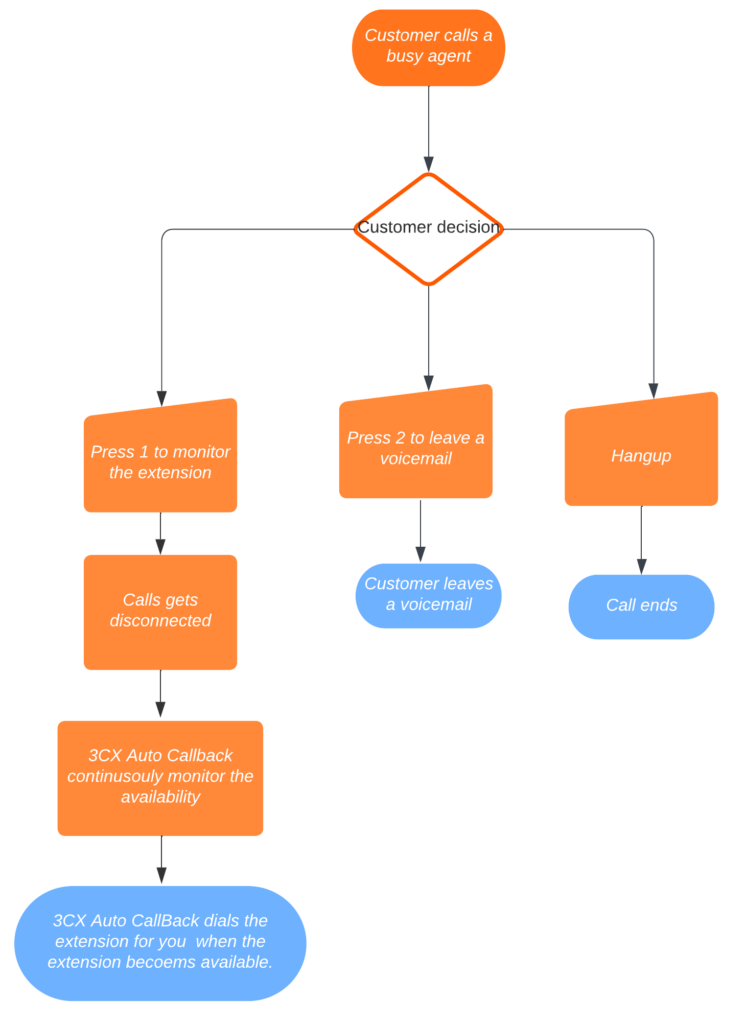
Prerequisites #
Before installing 3CX Auto Callback, you need to ensure that your computer meets the minimum requirements mentioned below:
| PREREQUISITE | PURPOSE |
|---|---|
| 3CX Version V20 | 3CX Auto Callback is designed to work seamlessly with this version for enhanced features and performance. |
| Windows 10 or above / Windows Server 2012 or above | These operating systems provide the necessary environment for the application to run efficiently. |
| IIS Features and Configuration – VoIPTools | IIS is needed as a web server to host and manage web-based applications and services. |
| .NET Framework 4.7.2 (Web Installer) | This framework provides essential components for running and developing applications. |
| VoIPTools Universal Updater | This component is necessary for updates, ensuring the application remains current and functional. |
| VoIPTools Relay Service | It is used for proper integration and functionality of the 3CX Competitive Wallboard within the 3CX environment. |
| Microsoft SQL Server 2016 or above (Including the free SQL Express edition) | 3CX requires Microsoft SQL Server 2016 or later for database management. |
| Static IP for VoIPTools and 3CX servers | This is to ensure proper two-way communication, both the 3CX server (Relay) and the VoIPTools server. Dynamically assigned IP addresses are not supported. Additionally, it is recommended to use HTTPS for secure communication, which requires a FQDN for SSL/TLS certificate validation between the VoIPTools server and the Relay. |
| Port number 7850 opened on your device | Port 7850 is a specific network port used by 3CX for communication purposes. Opening this port on the device’s firewall allows incoming and outgoing traffic to pass through, enabling the 3CX software to send and receive data over the network effectively. |
Installation overview #
 |
DOWNLOAD SOFTWARE | You can order the 3CX Auto Call Back online at https://www.voiptools.com. Your order confirmation email will include your license key and a link to download the software. |
 |
INSTALL PREREQUISITES | You must install several prerequisites before installing the 3CX Auto Call Back. The Advanced Installer identifies and installs these applications automatically. Click here to learn about the required prerequisites. |
 |
INSTALL 3CX AUTO CALL BACK | This User Guide contains step-by-step instructions to successfully install the 3CX Auto Call Back. Begin by extracting the installer from the downloaded zip file (Step 1 above), then run the setup program named AutoCallBack.exe |
 |
LOGIN TO THE WEB APPLICATION | You can now log in to your software using the Extension and PIN. |
Step-by-Step Installation Procedure #
The following section guides you through a detailed walk-through of the installation process.
Step 1: Download 3CX Auto Call Back #
Find the software download link in the Order Confirmation Email, or you can download the application by following the procedure,
- Open your browser and go to the VoIPTools official website or click here to get redirected to the website.
- Search for the Auto Call Back Application and click the Download
 button to download your application.
Step 2: Install Prerequisites #
Click on the software installer that was downloaded in Step 1 above. The installation wizard will automatically identify the needed prerequisites and assist you with the installation of the prerequisites needed to run the 3CX Auto Call Back.
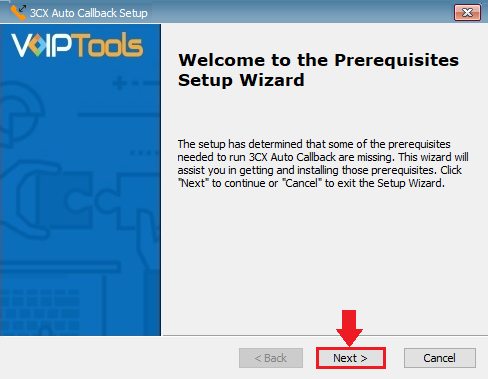
- Click the downloaded installer executable to launch the Prerequisites Setup Wizard and click Next.
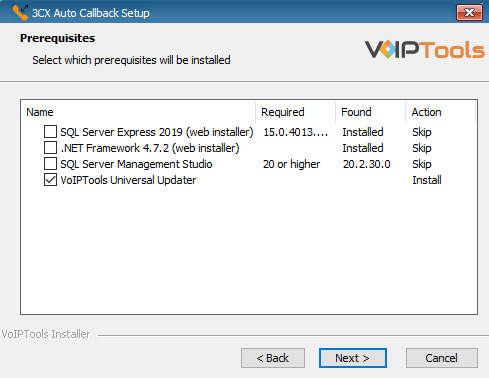
- In the Prerequisites window, the installer will identify the missing prerequisites. You must install all the required prerequisites. However, you can select/unselect the applications to be installed based on your unique requirements and click Next to continue.
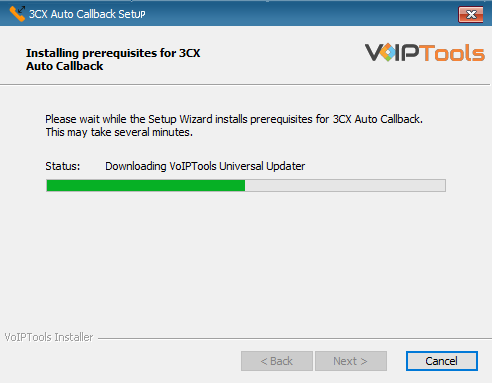
The installer will download and install the selected applications.
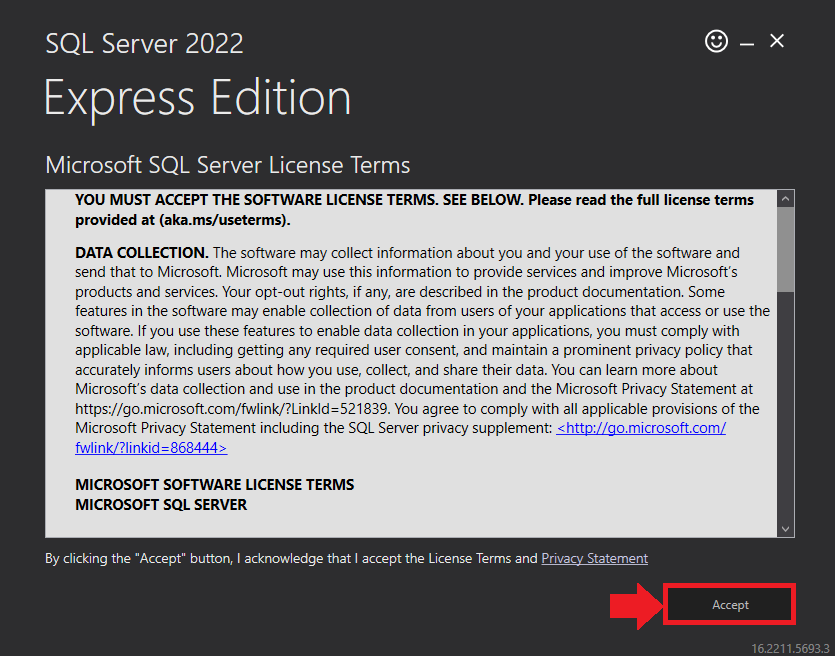
- In the Microsoft SQL Server License Terms click the Accept button to acknowledge the license terms and continue.
- This page appears if you do not have SQL Server Express preinstalled in your device.
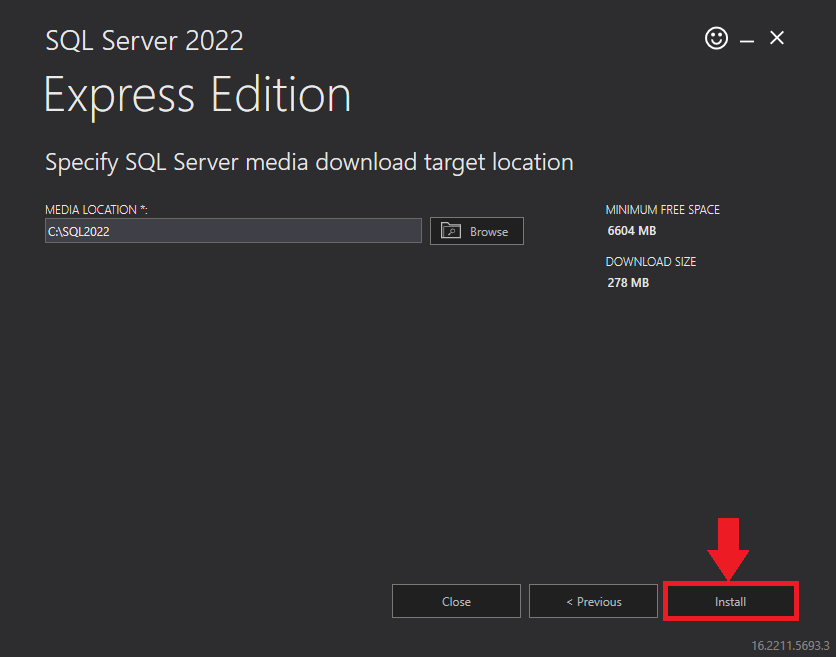
- View the SQL Server Media target location in the Media Location field. If required, you can click the Browse button to change the location. Click Install to begin the installation of SQL Server Express.
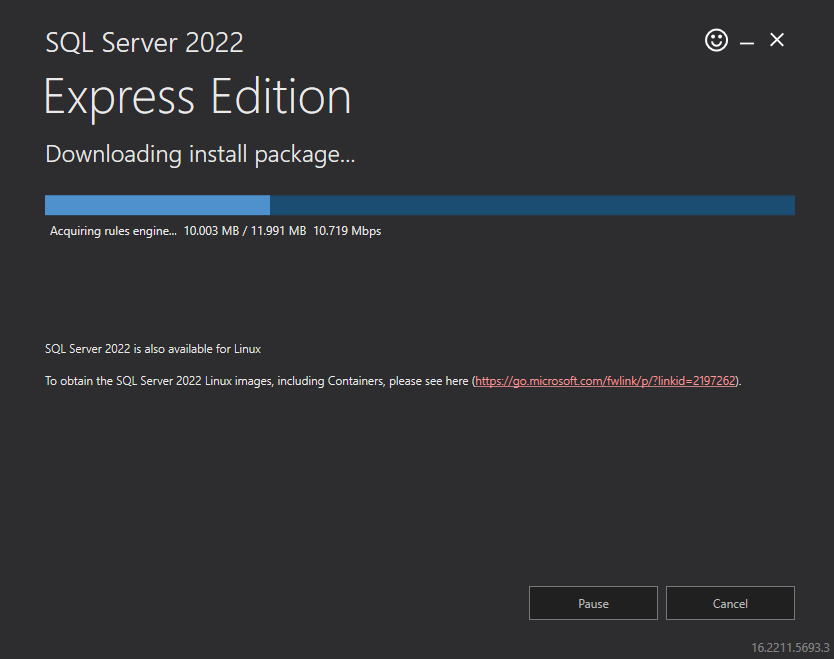
SQL server installation is in progress. This may take several minutes to complete.
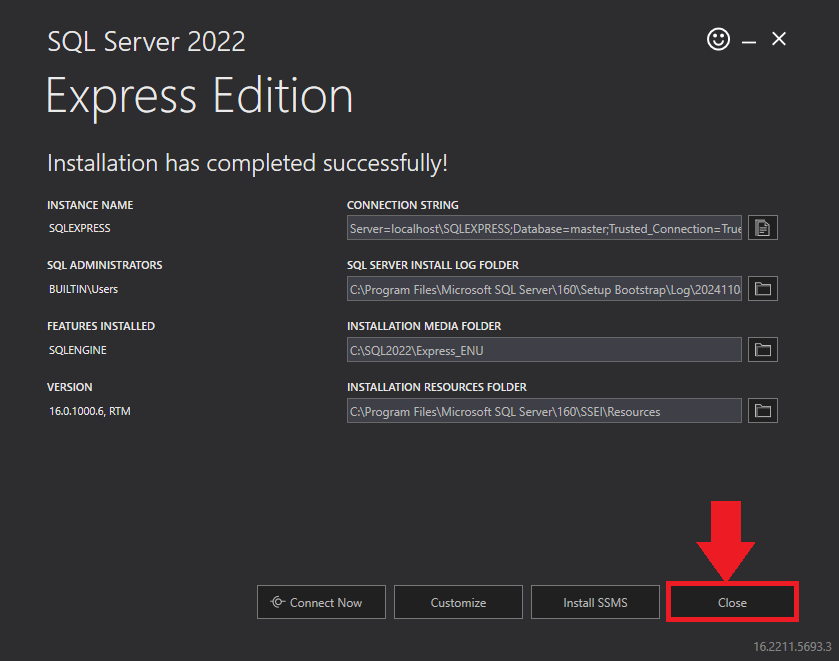
- Click the Close button once the prerequisites are installed.
- In the Confirmation Message box, click OK to reboot the computer.

Step 3: Start the installation process #
- After all the prerequisites are installed, click Next in the 3CX Auto Call Back Setup Wizard Continue.
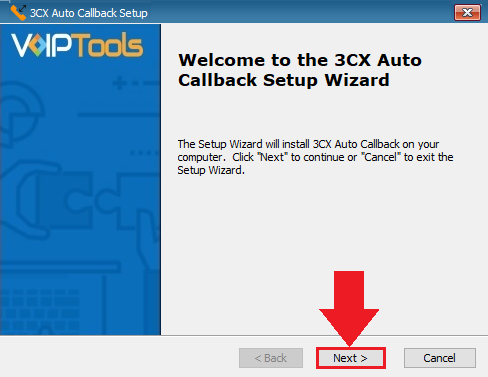
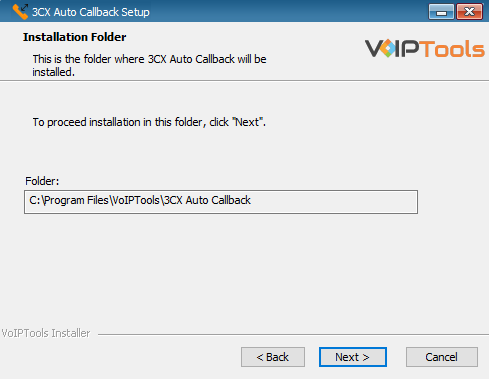
- On the Select Installation Folder window, in the Folder field view the location where the 3CX Auto Call Back gets installed.
- Click Next to continue with the installation.
NOTE:
You cannot change the path.
Step 4: Test Relay Settings #
- In the 3CX Relay Services window, in the Relay Host field, enter the FQDN of your 3CX server.
- Enter 8801 in the Relay Port field.
- Enter the public key you took from VoIPTools Relay services in the Public Key text area.
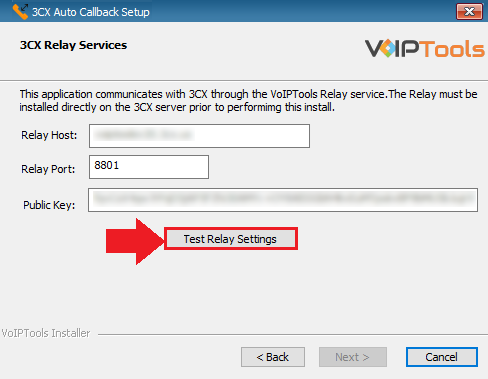
- Click the Test Relay Settings to confirm 3CX Auto Call Back can communicate with the Relay services running on the 3CX server.
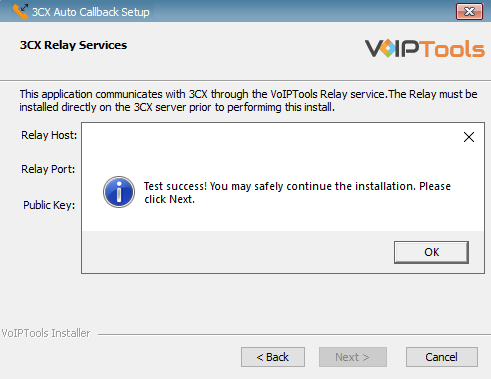
- If the 3CX Auto Call Back successfully communicates with the Relay services that run on the 3CX server, a Success message box appears. Click OK. If the test fails, you will not be able to continue until communication with the relay is established.
- Click Next to continue with the installation.
NOTE:
- You must set the Relay Port to 8801.
- If the Relay test fails, you cannot continue the installation until you establish communication with the Relay. Confirm the following if the test was unsuccessful:
- Confirm you have the correct firewall port open (default TCP 8801) on the 3CX server and the firewall protecting the 3CX server.
- Confirm that you have entered the correct FQDN for the 3CX server.
- Confirm that the 3CX Auto Call Back and Relay use the same port and protocol.
Step 5: Configure the database #
When configuring the 3CXAuto Call Back, select an existing Microsoft SQL Server instance in your environment. The database server can be a remote SQL Server, or a local instance running on the VoIPTools server.
You can set up the SQL database using SQL Authentication or Windows Integrated Authentication.
SQL Authentication #
- Enter your server name in the Server field.
- If using the free SQL Express Edition, the default SQL Instance name is SQLExpress.
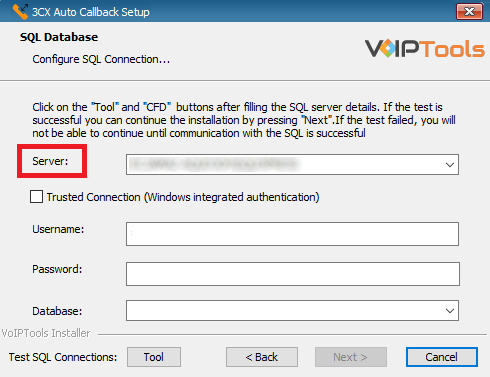
- If you want to use ‘SQL Authentication’, then install SQL Server in ‘Mixed‘ mode.
- If SQL Server is installed on a server other than the server where 3CX Exporter is installed, you will need to configure SQL Server to allow remote connections.
- Enter your credentials in the Username and Password fields.
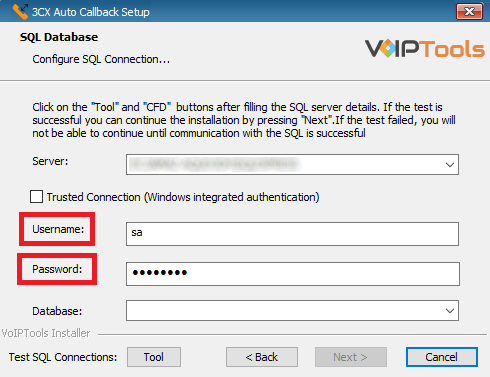
Make sure that you select a SQL Login that has sufficient permissions to alter the database and create SQL objects.
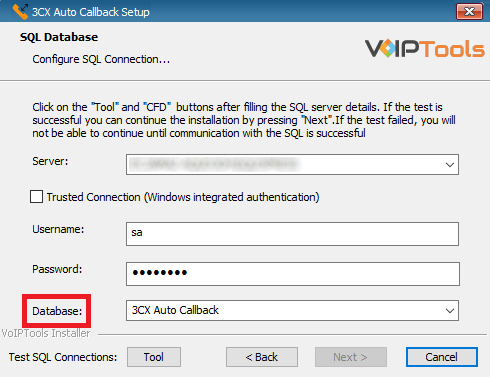
- Select or enter the 3CXAuto Call Back in the Database dropdown.
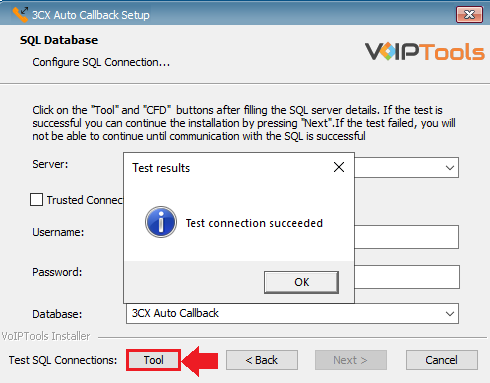
- In the Test SQL Connections section, click the Tool button to test the connection and click OK in the Test Results popup box.
Windows Integrated Authentication #
- To use Windows Integrated Authentication check the Trusted Connection (Windows integrated authentication) checkbox.
- The VoIPTools installer will create a local Windows user name as “VoIPToys” and give you sufficient rights to this user to create/update the SQL database.
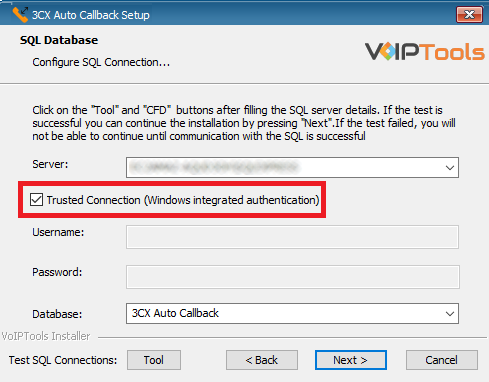
- In the Test SQL Connection section, click the Tool button to test the connection.
- Click the Next button which gets enabled when the database connection is successful.
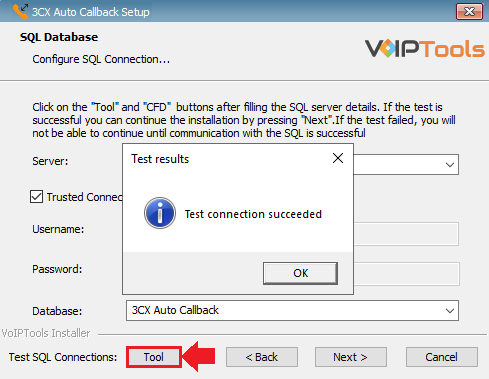
We encourage you to use SQL Authentication rather than Windows authentication. Many of our tools leverage a Call Flow Designer (CFD) application running on the 3CX. Frequently our CFD applications require access to a SQL database. If the 3CX server and the database server are not in an Active Directory domain, Windows authentication will fail. To use SQL authentication, your SQL Server must be configured to run in “Mixed Mode”. If you installed SQL Server with one of our tools, we configure SQL in “Mixed Mode”.
Step 6: Installing 3CX Auto Call Back #
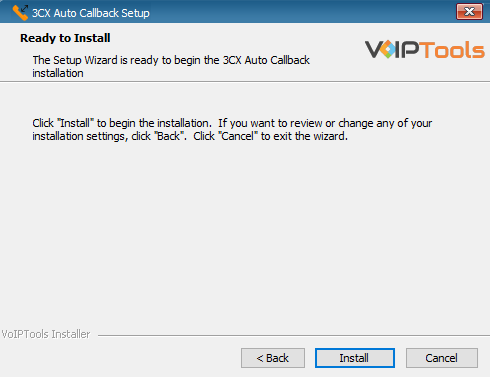
- In the Ready to Install window, click Install to start the installation of the 3CX Auto Call Back.
The application installation progresses.
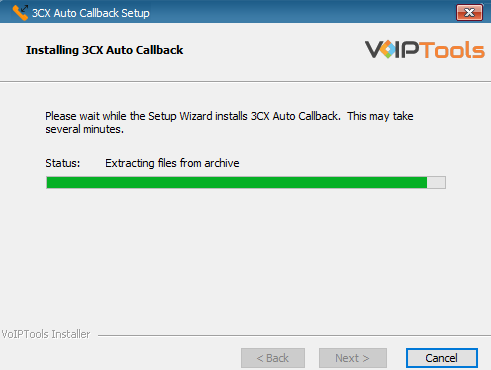
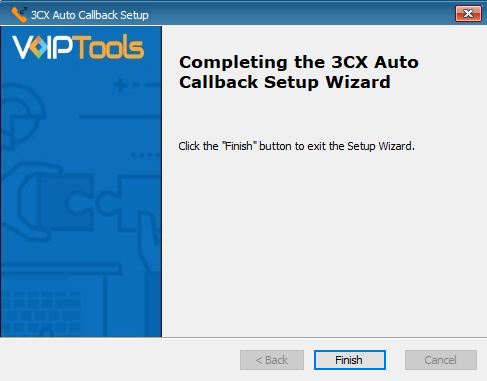
- Once the installation is complete, click Finish to complete the installation process.
Step 7: Login to the Web Application: #
Before you Start: Make sure you have registered with the VoIPTools Relay which grants access to the application.
Follow the procedure to register your software,
- Click the 3CX Auto Call Back Desktop Icon
 to open the web application.
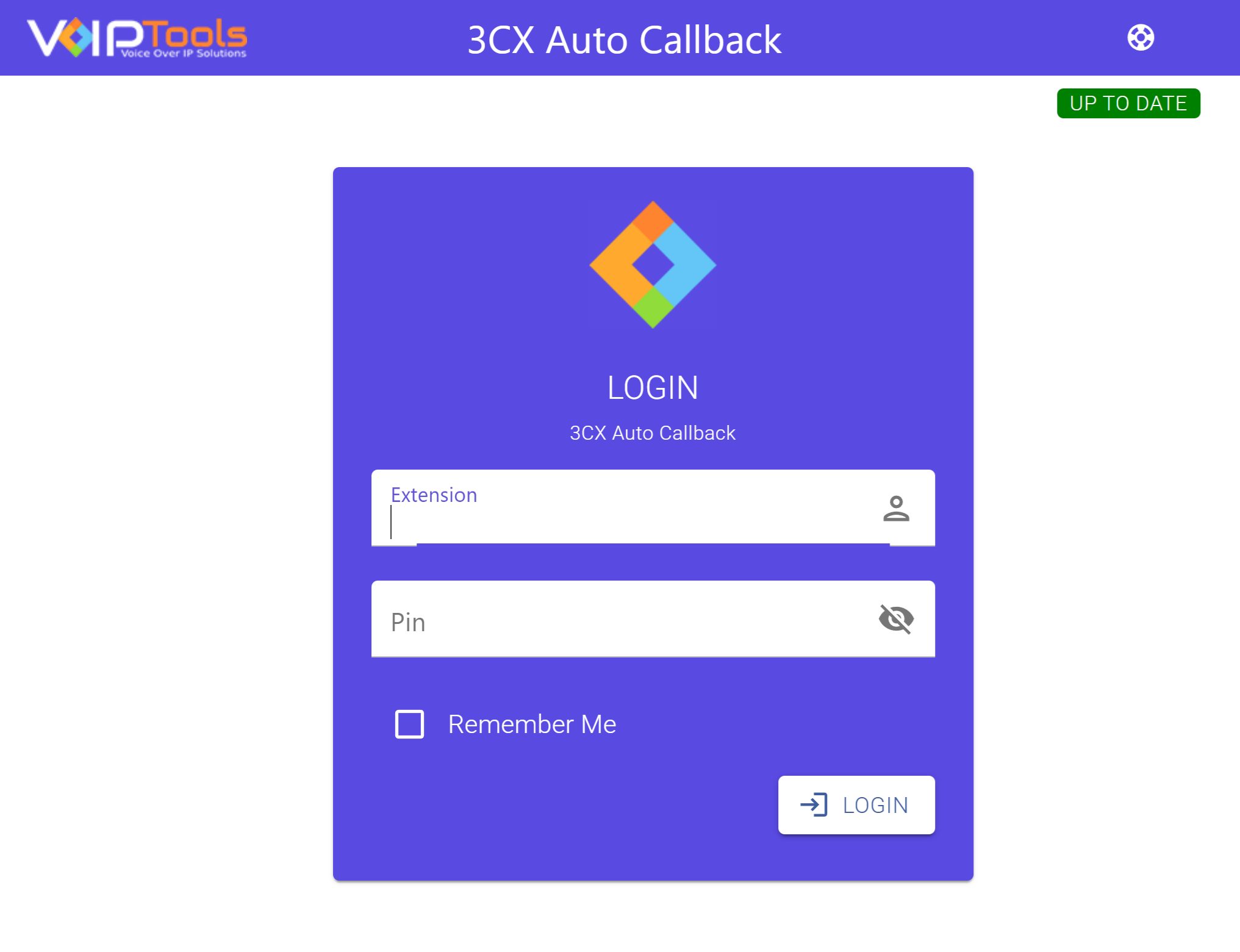
 - On the Login page, do the following tasks,
- In the Extension field, enter your 3CX extension number.
- In the PIN field, enter your 3CX voicemail PIN.
- Click the Login button to log in to your account
Web Portal #
Overview of the Menu Items #
Settings Menu #
The Settings Menu lets you configure the Auto Callback service. You can set callback timing and server details, control web portal access, and apply custom branding to the application. Click a panel to expand it and view its options.
General Settings #
This section guides you to configure the general settings for the Auto Callback service.
Before you Begin: Make sure you are logged in to the application and have navigated to the Settings menu.
- Click General Settings to open the panel.
- In the Max Wait (Minutes) field, enter how long a callback should wait for an agent before it stops trying.
- In the Frequency (Seconds) field, enter how often the service checks for an open agent.
- In the VoIPTools Server URL field, enter your server address in the format shown below the field.
- Click the Validate button to check that the address works.
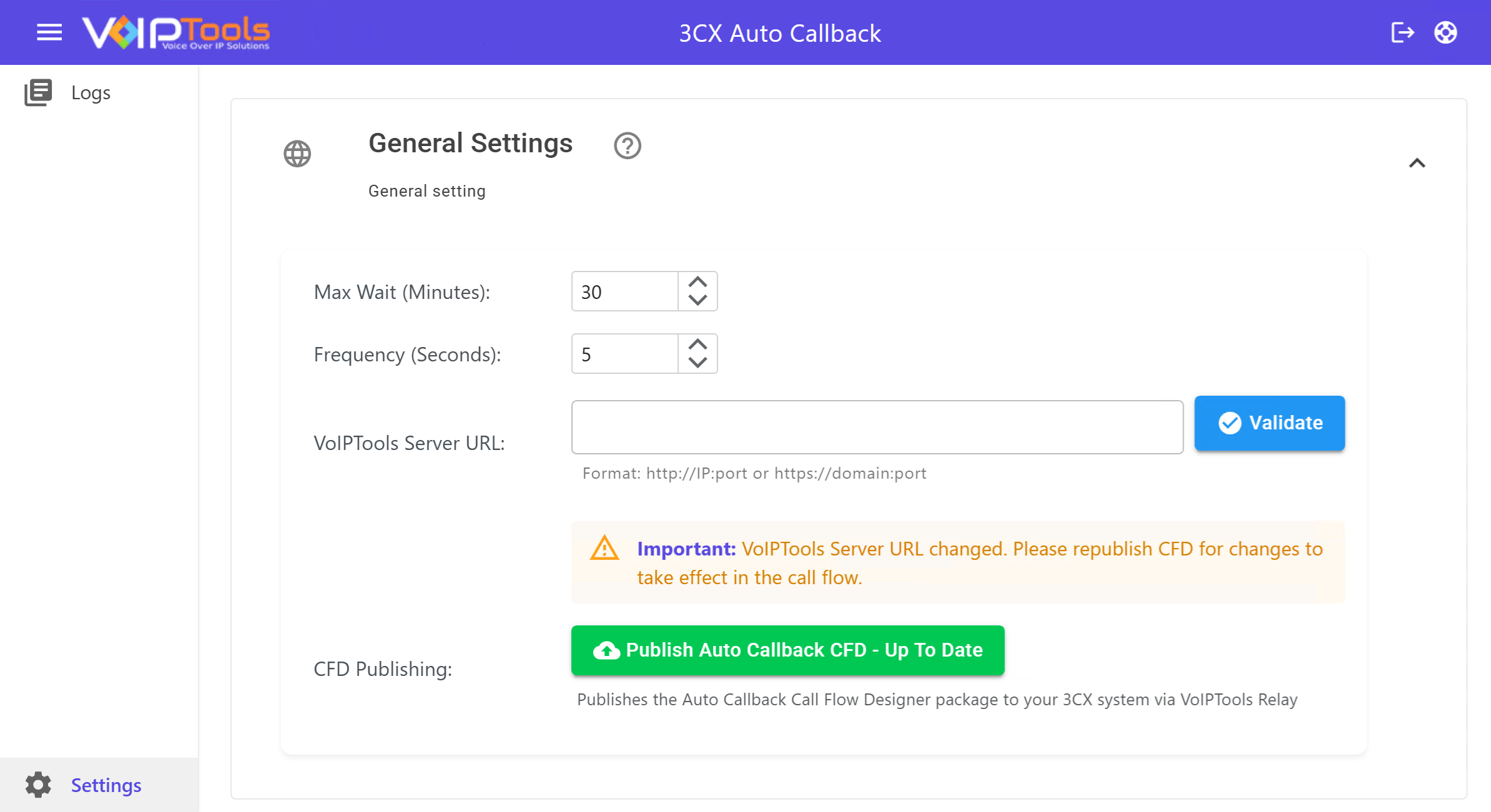
If you change the server address, a banner reminds you to publish the CFD again so the change takes effect in your call flow.
Publish the CFD #
This section guides you to publish the Call Flow Designer (CFD) so your 3CX system picks up your changes in General Settings.
Before you Begin: Make sure you have finished updating the fields in General Settings.
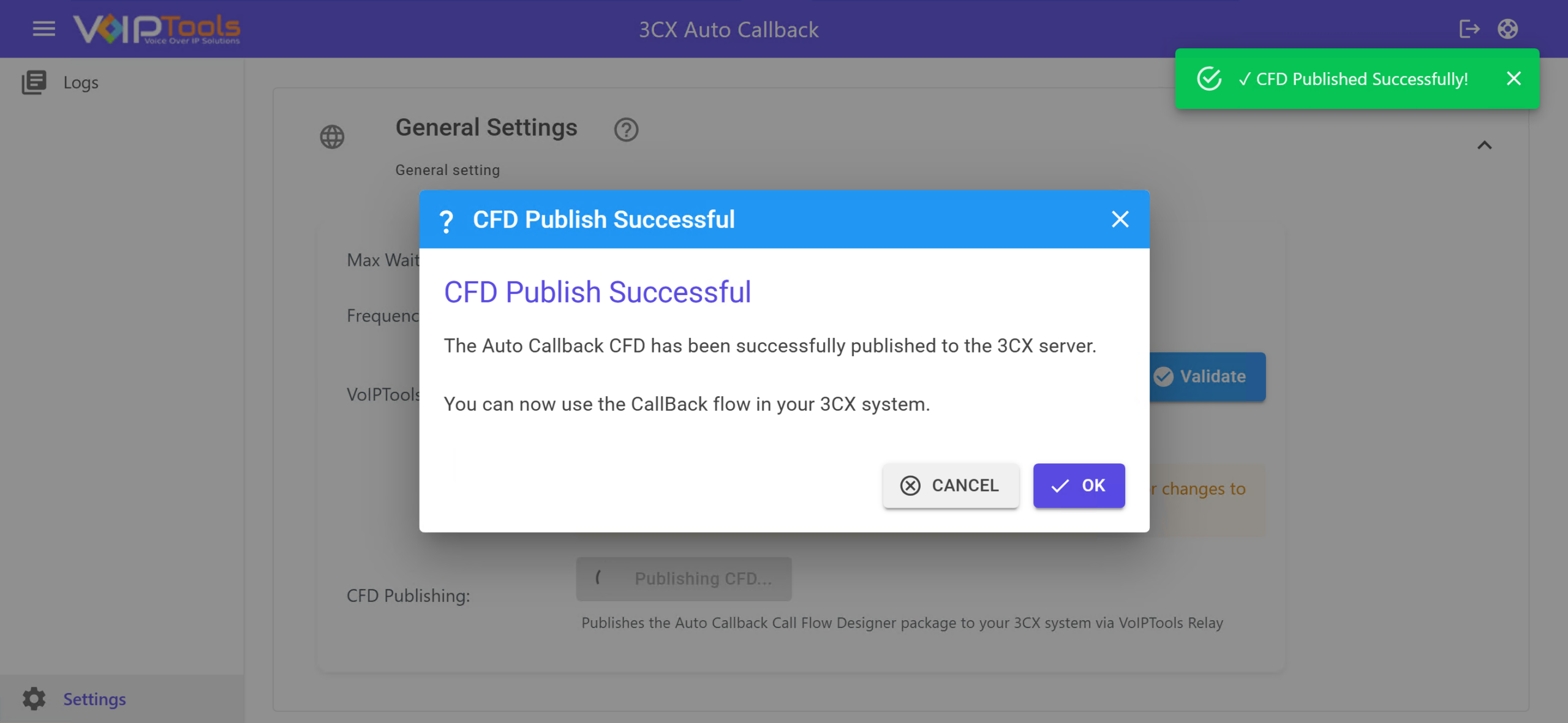
- Select the Publish Auto Callback CFD.
- In the Confirm CFD Publish window, review the server address shown.
- Click YES to continue, or CANCEL to stop.
- When the CFD Publish Successful window appears, click OK to close it.
Web Portal #
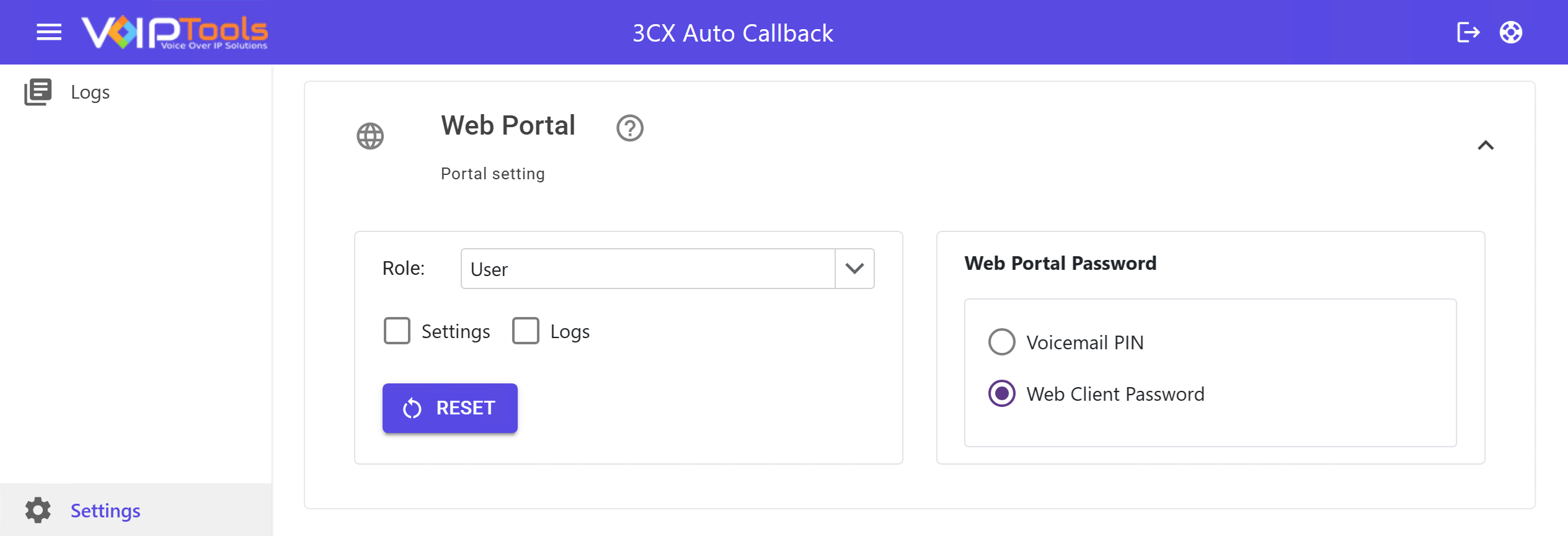
This section guides you to set up web portal access for a role.
Before you Begin: Make sure you are logged in to the application and have navigated to the Settings menu.
- Click Web Portal to open the panel.
- Select a Role from the list to choose which role you are setting up.
- Check Settings, Logs, or both, to let that role view those screens in the web portal.
- Under Web Portal Password, choose Voicemail PIN or Web Client Password to set how that role signs in.
Custom Branding #
This section guides you to apply your own name, logo, and colors to the application.
Before you Begin: Make sure you are logged in to the application and have navigated to the Settings menu.
- Click Custom Branding to open the panel.
- In the Header Title field, enter the name you want to show in the application header.
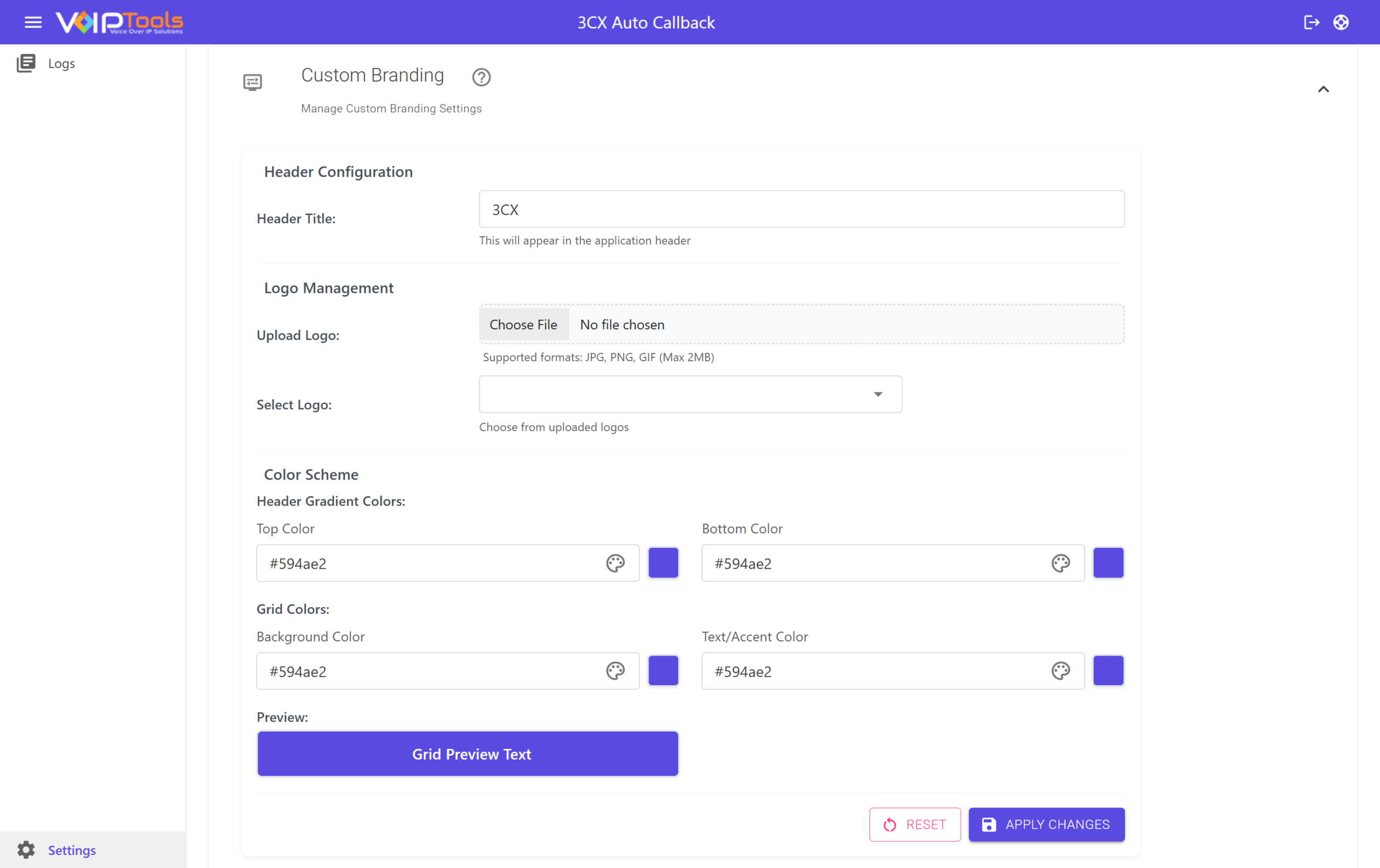
- Under Upload Logo, click Choose File.
- In the picker window, find your logo file.
- Click Open.
- Under Select Logo, choose your uploaded file from the list.
Header Gradient Colors blend the Top Color into the Bottom Color across the header. Grid Colors set the background and text of the preview grid below it. A hex code is a short string of letters and numbers that stands for one color.
- For each color, type a hex code, or click the palette icon to pick a color on screen.
- Look at the Preview area to see your changes.
- Click APPLY CHANGES to save your branding.
Logs Menu #
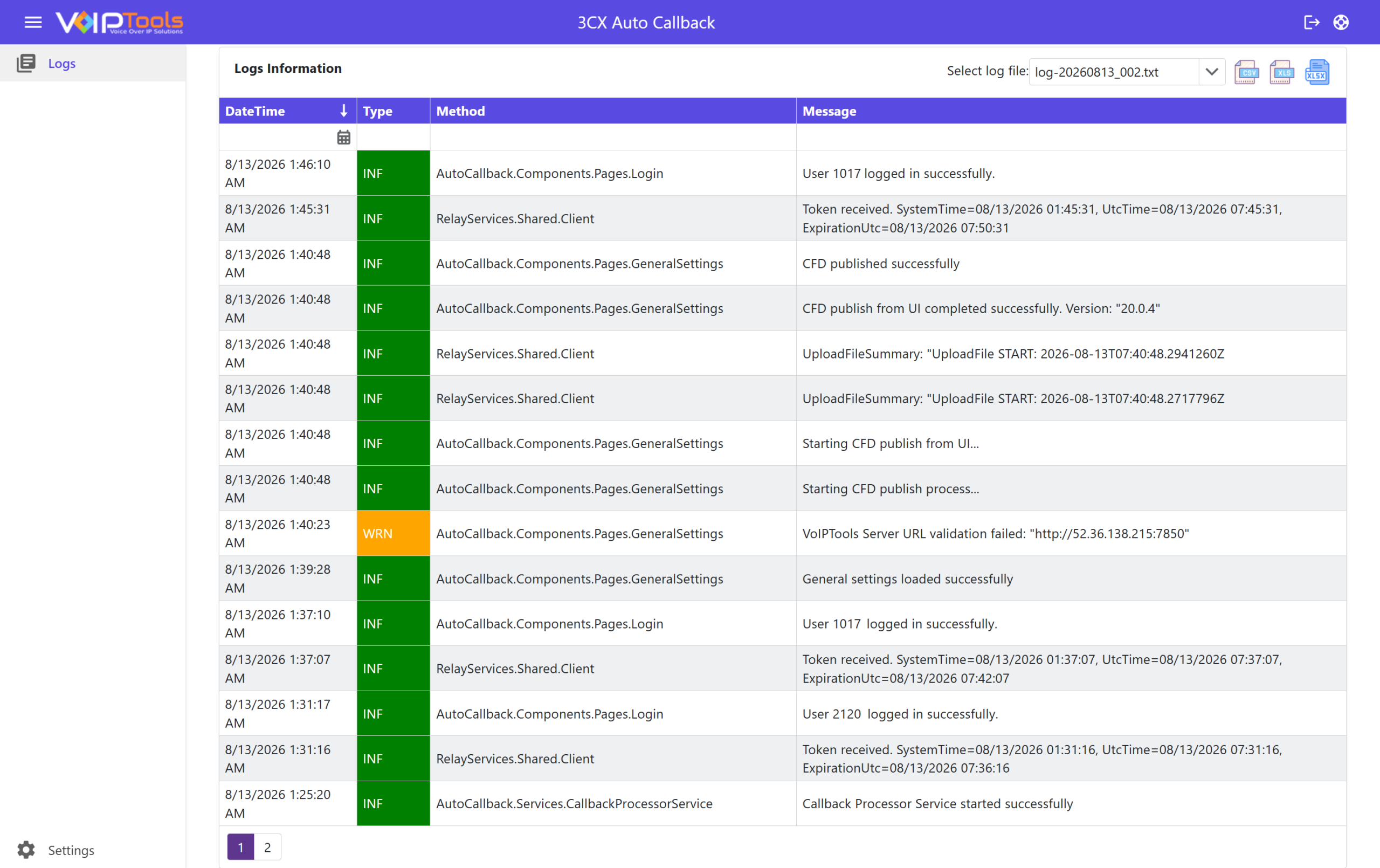
The Logs Menu lets you view the login and logout events of all the sessions along with ‘Date’ and ‘Time’ that is according to the time zone set in the ‘Web Portal’ tab in Settings menu.
Field Definitions
| Field | Definition |
|---|---|
| Logs Information Table | Displays system events and activity records used for monitoring, troubleshooting, and auditing. It helps users review application behavior, track system actions, and identify issues based on the selected log file. |
| Date/Time | Displays the date and time when the log event occurred based on the system-generated timestamp. |
| Type | Indicates the category or severity level of the log entry to help identify the nature of the event: INF = Informational (normal activity), WRN = Warning (potential issue), ERR = Error (system issue or failure). |
| Method | Displays the system component, process, or function where the log event originated. |
| Message | Shows detailed information about the recorded event, including actions performed, warnings, errors, or system responses. |
| Select Log File | Allows you to select a specific log file to view its recorded events. |
| Page Size | Defines the number of log entries displayed per page. |
